
GOLD PROBE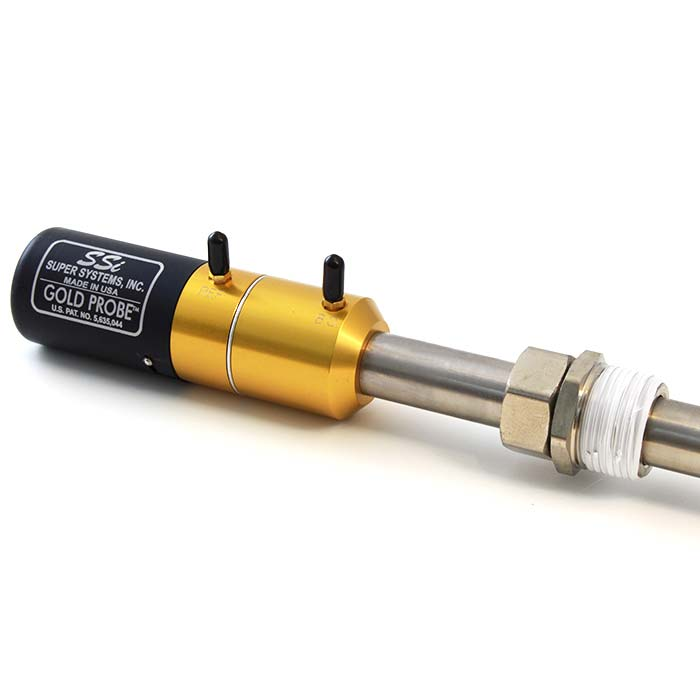
Gold Probe Oxygen Probe
The world's best-selling zirconia oxygen probe measures and controls oxygen, dew point and carbon potential in heat treatment furnace atmospheres.
Oxygen probes
In-situ oxygen sensor that measures oxygen concentration in the exhaust of boilers, furnaces and flues at temperatures up to 400 °C.
The Mini-OX is an in-situ oxygen sensor for control in low temperature applications. It measures %Oxygen concentrations in the exhaust of furnaces, boilers and other applications and is ideal for package boilers.
The linear analogue output makes the sensor easy to connect to an existing combustion controller, so the air to fuel ratio can be trimmed continuously instead of being set once and left. Calibration can be carried out in normal air and can be triggered externally, which keeps routine servicing short.
Prolonged operation below 0.1% O2 can damage the sensing element. The sensor measures the partial pressure of oxygen in the sample gas, so deviations in barometric pressure from the value present during calibration cause readout errors proportional to the change.
| Oxygen range (analogue output) | 0.1 to 25 % O2 |
|---|---|
| Accuracy after calibration | 1 % O2 |
| Repeatability after calibration | 0.5 % O2 |
| Permissible gas temperature (probe tip) | -100 °C to +400 °C (-148 °F to +752 °F) |
| Housing temperature limits | -10 °C to +85 °C (14 °F to 185 °F) |
| Gas flow rate | 0 to 10 m/s (0 to 33 ft/s) |
| Supply voltage | 24 VDC +/- 10 % |
| Supply current | 500 mA max at 24 VDC |
| Analogue output | 4-20 mA, load 600 Ohm max / 0-10 VDC, load 10 kOhm max |
| Available lengths | 400 mm |
| Warm up time | 60 s |
| Output stabilisation time | approx. 180 s |
Applications
The probe measures and controls the carbon potential in controlled atmospheres, whatever the furnace design.
Enquiry
We reply within one working day, with a configuration and a quotation.
The world's best-selling zirconia oxygen probe measures and controls oxygen, dew point and carbon potential in heat treatment furnace atmospheres.
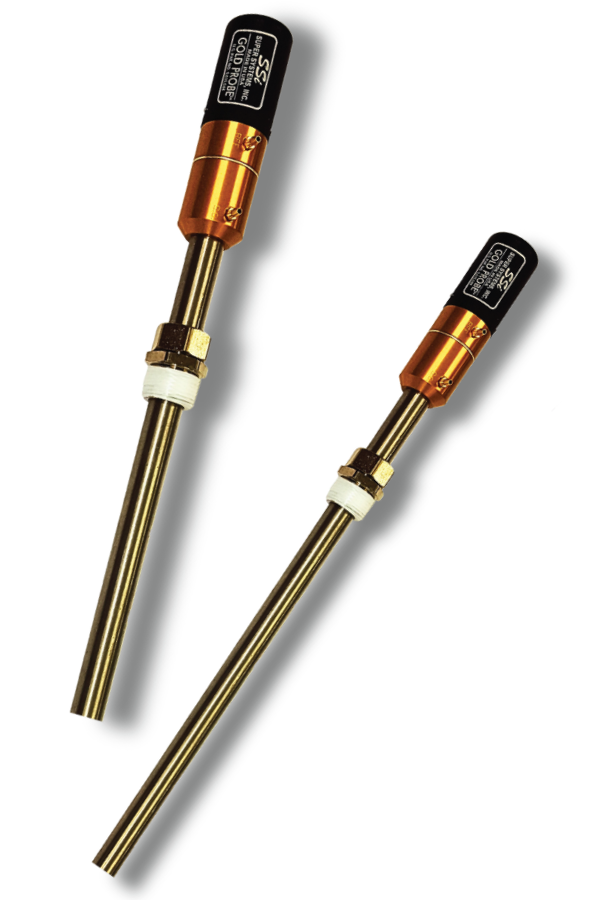
A patented diffused ceramic CERMET coating protects the sheath against temperature and carbon erosion, extending probe life in aggressive carburising atmospheres.
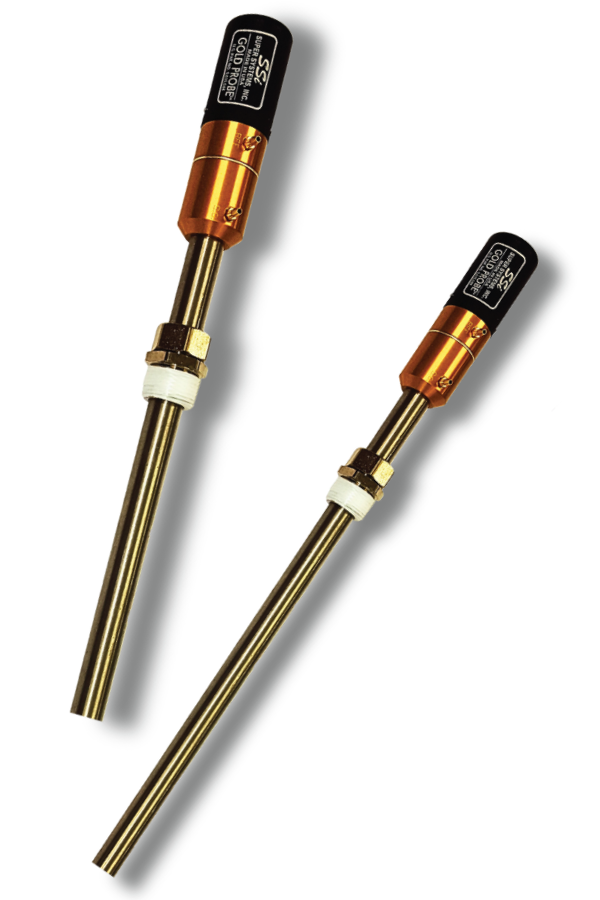
A reinforced spring assembly compensates the differential thermal expansion of ceramic parts and sheath in probes longer than 1000 mm.